The Midlife Brain

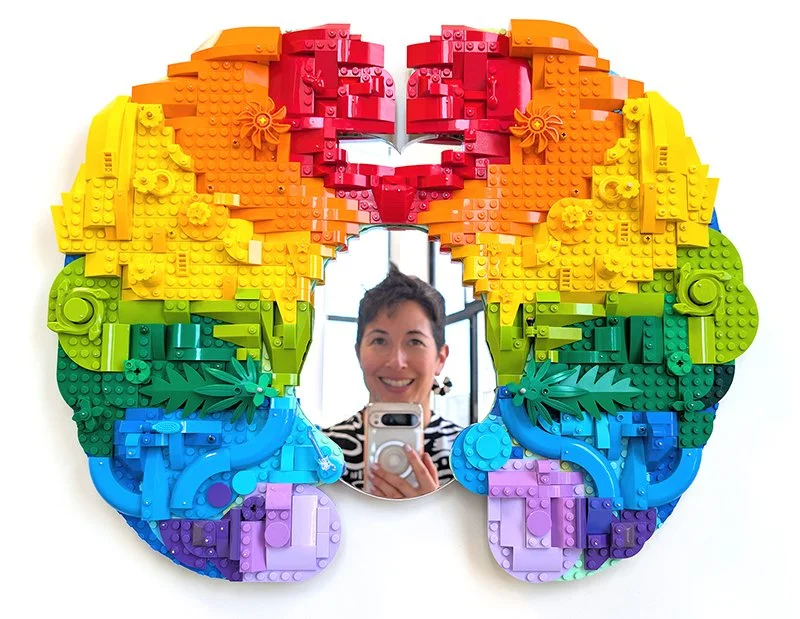
emikooreware Become One Hedwig Tribute Mirror, copyright 2026

Become One Hedwig Tribute Mirror ,© emikooreware 2026

As I've been prepping for my menopause/hormone appointment coming up next month with my new OB/GYN (YAY!), I've been really honing in on my peri symptoms I want to address with hormone treatment. Brain fog and disrupted sleep is at the top of my list, especially since both of my grandmothers suffered from dementia later in life, and my father has been diagnosed with mild cognitive impairment.

As the Universe leads you to what you need, I came across Dr. Mary Claire Haver's fairly new podcast, unPaused, specifically these episodes on Brain health, from which I've transcribed some key tips in the post below. 


The Midlife Brain Protection Plan

ISSUE: BRAIN FOG

BRAIN FOG is a symptom that is fixable. It can mean several things: increased trouble with cognition, fatigue, forgetfulness, slowness in thinking, trouble concentrating or remembering. Exasperated by the loss of estrogen or a high cortisol state. Your brain consumes 20% of your total energy that you take in. Glucose is the fuel your brain needs - it is a building block for Glutamate (the most prevalent neurotransmitter in the entire brain) needed to synthesize GABA and plays a critical role in brain functions such as cognitive function, learning, and memory. Estrogen helps meditate glucose in your blood to get into the cell body to be used - for cognitive function and energy.

When we start to see a dip in estrogen, our brain is not as supported, glucose metabolism not working as well, sleep disruption happens, lower tolerance to stress.  

NOTE: Alzheimers starts quietly in our 30s-40s and can take many decades before being detected - thus, let's start being proactive nowabout brain health!


1. Prioritizing DEEP SLEEP/slow wave sleep - this is the only time the brain can take care of itself, when the body is completely still and at rest, activating your Glymphatic system to flush out toxins, oxidative stress, plaques, inflammation of the day.

Sleep hygiene is a very important protective factor in brain health.

Sleep Deprivation is a RISK FACTOR for Alzheimers. If sleep is fragmented & you lose that window of deep sleep, over time the accumulation of toxins has consequences on brain health.

ISSUE: SLEEP DISRUPTION - Every night waking up in the middle of the night to pee.

WHY IS THIS HAPPENING: If Cortisol (our stress hormone) is high in the body, it suppresses Melatonin production (sleep hormone). In sleep, usually melatonin peaks around 1-3am and remains in the system UNLESS you're stressed out or run out of melatonin, in which case cortisol kicks in @ 2am and your brain WAKES YOU UP.

THE SCIENCE: The body needs a common precursor (pregnenolone, a direct derivative of cholesterol) to make both sex hormones and cortisol. If you’re super stressed out, the body is going to have to use more of the pregnenolone to make the cortisol, and that means it cannot make as much of the sex hormones = Stress sinks your hormones. Women who are really stressed out, may experience more severe symptoms in menopause.


TROUBLE FALLING ASLEEP?  
WHY IS THIS HAPPENING: Loss/deficiency of Progesterone, which activates GABA and is also has anti-anxiety benefits, or your core body temp isn't getting low enough (as with hot flashes). 

THE SCIENCE: To fall and stay asleep, our core body temp needs to fall 2 degrees. Cortisol rises according to the sun, and increases our core body temperature, which is what wakes us up. Ask Yourself: are you waking up because your core body temp is rising, or is it cortisol dominance?

TO COOL YOURSELF DOWN: Keep your feet out of the sheets OR Take a hot shower before bed

HOW MUCH SLEEP IS ENOUGH? Min 7-7.5hrs sleep
Even one night of sleep deprivation (less than 7 hrs) can raise Amyloid-beta circulation levels in the brain. Amyloid-beta prevents you from going to sleep. People with mild cognitive impairment and Alzheimer’s have trouble falling asleep because of the accumulation of Amyloid-beta.

2. EXERCISE and Brain Health

Exercise is by far, the best elixir for your brain. Women who are fit in midlife (who have a high peak respiratory fitness, measured by a V02 max test) can lower their risk of dementia by 80%!

Women in peri/menopause have increased white brain matter lesions - Exercise can improve those white matter lesions.

80% off gray brain matter is modifiable by physical activity.

THE SCIENCE: Exercise supports brain health through multiple pathways: 

A. Increasing blood flow to the brain - supports oxygenation and nutrient transmission;

B. Anti-inflammatory and reduces oxidative stress

C. When muscles contract as part of exercise, they produce a bioactive peptide Irisin, which crosses the blood-brain barrier - supports estrogen, reduces amount of pro-inflammatory cytokines in neurons

HOW DIFFERENT TYPES OF EXERCISE ARE BENEFICIAL:

Zone 5 (working out to your max heart rate) 20 min/wk "4x4": 4 min on hard, 4 min rest for 4 sets
You’re producing lactate - fuel for your brain. Brain prefers it to glucose.

High Intensity workout (5x week, @ 80% max heart rate)
Improved cardiovascular health - reversed age related decline in the heart by 20 years. 
= Better performing heart, stronger chambers - more blood being able to be delivered to the brain. Brain is the most vascular rich organ in the body.

Metabolic/Aerobic (Zone 2, 60% of your max heart rate) 30 min /3x week: brisk walk/light jog and still be able to talk
= Massive release of BDNF (brain derived neurotrophic factor) - crosses blood brain barrier and grow new neurons in the hippocampus (by 2%) AND can decrease your risk on 13 types of cancer.

Resistance Training 3x week
You release myokines (muscle based proteins that live inside the muscle all over our body and our brain) - improves your executive function/frontal lobe. Best way of staving off neurodegeneration. 

4. BEING KIND TO YOURSELF: (affirmations, journaling ) You send to your brain that you are safe and it downregulates cortisol, makes you happier and appreciate your day-to-day.

Originally posted in my newsletter July 14, 2026
Sunscreen - Are You Wearing it? 

Organic vs Inorganic Sunscreens

Today it's 85 degrees in SF, sun is shining full-blast, and as Matt was leaving the house for the day, I asked, "do you have sunscreen on?" Nope. Oopsies!

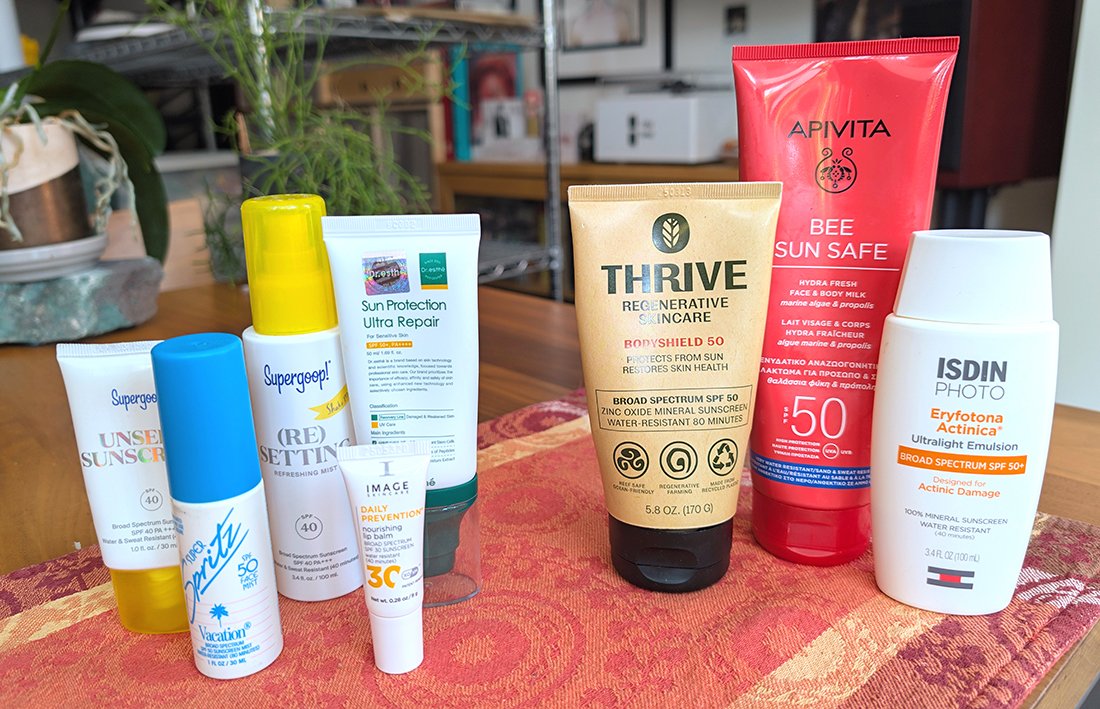
Sunscreen is my non-negotiable skin-care product for going outside (and for airplane travel if sitting by the window - UV rays are super strong in the skies). As you can see from the photo above, I have a drawer-full of sunscreen options, some I prefer more to others. Even on non-sunny days I apply it, as up to 80% of UV rays can penetrate clouds.

Of course you know that excessive UV exposure (getting burned) can lead to skin cancer. Did you know that skin cancer the most common type of cancer in the US & UK, and if it spreads, the deadliest type, melanoma, has only a 35% five-year survival rate! Your risk of developing melanoma DOUBLES if you've had a history of 5+ sunburns.

I was listening to yet another podcast episode about Menopause and Skin - UnPaused with Dr. Mary Claire Haver over 2 episodes she talks with Dr. Erica Kelly, board-certified dermatologist, Clinical Professor at the University of Texas Medical Branch, and founder and director of UTMB's Cosmetic Dermatology Division. Sunscreen is Dr. Kelly's #1 recommended Skincare Ingredient. 

"Don't forget about your SCALP, EARS, LOWER LIP", she says! she sees a lot of skin cancers on the scalp! She and other experts say that the BEST SUNSCREEN is the one you are happy to use. "Cover what you can (of your body with clothes, hat) and apply the smallest amount of sunscreen.”

HOW TO CHOOSE? Organic vs. Inorganic

There are 2 types of sunscreens, Organic (Chemical) and Inorganic (Physical). This is not like organic vs inorganic food. Both types contain chemicals and are lab-produced. What makes a sunscreen organic is that the UV filters contain carbon-hydrogen bonds. Both have their benefits and cons. I have a variety of both - in the image above, my Chemical sunscreens are on the left-side, Physical sunscreens on the right.

Organic Sunscreens (Chemical Filters)

  • Composition: Made of carbon-containing (organic) molecules like avobenzone, oxybenzone, octinoxate, and homosalate. 

  • How They Work: They absorb UV radiation like a sponge and convert it into harmless heat, which is released from your skin, preventing UV from reaching the skin.

  • Texture & Appearance: Typically lightweight, sheer, and easy to rub in without leaving a white cast. 

  • Performance: Need to apply 20 minutes ahead of time so can be absorbed into the skin. Often achieve higher protection factors and broader photostability for UVA/UVB rays. 

  • PROS: More lightweight, blendable application, transparent on skin. 

  • CONS: Not immediately effective. May cause allergic reactions/irritation, cause burning if gets in eyes. Absorbs into your bloodstream, which may cause side effects such as rashes.

Inorganic Sunscreens (Mineral / Physical Filters)

  • Composition: Made of mineral compounds lacking carbon-hydrogen bonds, specifically zinc oxide and titanium dioxide.

  • How They Work: They sit on the skin’s surface like a shield, scattering and reflecting a small portion (about 5%) of incoming UV rays away from the skin, while absorbing the majority (95%) of the rays

  • Texture & Appearance: Traditionally heavier and thicker, though modern formulations are much lighter and sheerer; can leave a white or opaque cast.

  • Performance: Start working immediately upon application

  • PROS: Immediately effective. Good for sensitive skin or acne-prone skin, and children. Less likely to cause irritation or allergic reactions. Less absorption into the bloodstream. Better for the environment

  • CONS: Slower application, can feel heavier on skin or can be harder to spread. Can leave a white cast on skin (though this is improving in certain brands)

ENVIRONMENTAL CONCERNS: CORAL REEFS

2018 Hawaii made the move to ban sale of sunscreens containing chemical oxybenzone and oxtinoxate (organic UV filters). However, inorganic UV filters may have an effect too. The studies that have raised concerns about effects on the environment have mostly been lab-based experiments. Some marine biologists point out that the far larger threat to corals is climate change - and that the biggest bleaching events have been in places without tourists.

INFO SOURCES: 

Originally posted in my Facial Gua Sha Newsletter, October 16, 2026

The Power of Vibration

Happy Pumpkin Season! I had another very productive trip back to Cleveland to help Mom with Dad's care (and her peace of mind), and got to enjoy the beauty of Fall in the suburbs - so many Halloween decorations everywhere! I definitely learned my lesson from my previous trip there of how to take care of my nervous system amidst the stressors - the necessity for daily grounding and clearing, and safeguarding my immune system.

Even though my usual exercise regimen was interrupted, a non-negotiable for me is daily vibrational therapy for Lymphathic Drainage, tissue health, and accessing calm with my MELT Fascia Hydrator™. It's so easy to travel with and takes less than 10 minutes to do! I even gave one to Mom to use on Dad at the nursing home and he seems to appreciate it (he gives me the thumbs up sign when I place it on his bed next to his leg and arm). He's able to sense the vibration even on his right side that's been paralyzed from stroke.

As I've mentioned many a time in class and in these newsletters, a healthy lymphatic system and fascial network are key players to our overall health. Scientific studies have shown that fascia is a vibrational system and that its components (collagen, fibroblast, fluid) have unique mechanical and electrical properties that respond to frequency, influencing hydration, mechanoreceptor activation and cellular communication.

BENEFITS OF VIBRATION VIA THE MELT FASCIA HYDRATOR™:

  • Rehydrates Fascia, enhancing elasticity, fluid movement, and full-body glide

  • Stimulates blood flow, helping to increase oxygen delivery and nutrient absorption at a cellular level

  • Boosts Lymphatic Flow, clearing lymphatic congestion, accelerating detoxification and reducing puffiness, inflammation, and heaviness

  • Gently releases stuck stress, soothes overworked tissues

  • Balances and Calms, activatig your parasympathetic nervous system and supporting endocrine health

  • Improves the appearance of cellulite caused by metabolic stagnation and connective tissue distortion

That said, I'm excited to launch my first MELT FASCIA HYDRATOR RESET SERIES In-Person, starting October 18! Take advantage of Early Bird Savings by registering for the series by Oct 14, 2026.

Originally published in my emikooyoga Newsletter, October 8, 2026

Strong Feet Are Key!

foot strengthening tools

Strong Feet are Key!


This summer I've been on a mission to tackle my foot pain, as some of you may know from last month's Gua Sha newsletter and our last Gua Sha livestream for Foot Pain Relief. For me, plantar fasciitis was the last straw that ingited this passion to learn more. I now believe that my long-term foot issues (aka weak foot bed and ankles) have been the root of my hip pain and cranky knee.

Huge AHA moments listening to foot doctor, Dr. Courtney Conley of Gait Happens on both The Diary of a CEO podcast and The Body Pod with Hailey Happens talk about Why Foot Strength is Key to Balance, Power, and Aging Well. I've since put many of her suggestions into practice and WOW, guess what, NO MORE FOOT PAIN or Big Toe pain, my hips feel stable, and I can sustain walking for longer distances. 

Below are nuggets of info gleaned from both talks.

ANATOMICAL FACT: There are tons of receptors in the bottom of the foot that communicate with our body where we are in space.

  • By age 50 you lose sensitivity to those receptors: it takes 25% more pressure to stimulate these receptors.

  • By age 80, it takes 75% more pressure to stimulate the receptors! Pair that with sarcopenia (loss of muscle strength) in the foot and oh boy!

  • Toe Splay is important: the widest part of your foot should be your Toes, NOT your Forefoot. The wider your toe bed, the more stable you are.

Direct correlation between your PELVIS and your FEET. The stronger your foot gets, the stronger you'll be able to load your hip.

  • Especially your Big Toe - which should be able to extend 65 degrees, because in a walking gait cycle, you need 40-45 degrees extension for push off. When there's decreased range in the big toe, you'll rely on nearby joints to do the work. If you can't roll through your foot, you lose range of motion at the ankle and hip.

  • A study of Big Toe Strength showed there is synergetic muscle activity of pelvic floor and big toe: When there is stress and holding in the pelvis, it will tighten the feet. Thus, relax your feet to relax your pelvis.

  • Bunions and hammer toes increase your risk of falling and balance issues.

  • Low back pain? Culprit could be your feet.

SHOES MATTER: You need to wear functional footwear that allows the foot to do what it was designed to do. A strong foot is meant to carry up to 11x your body weight when running!

  • Consider this: when you're strength training/lifting weights, would you feel more stable standing on a solid ground or on a pillow?

  • SIDE NOTE: I know, I have bought my share of Hokas and cushiony athletic shoes, and while they felt immediately comfortable, they were babying my feet and not allowing my foot bed to strengthen. A dear friend of mine threw hers out when she tripped in her Hokas and broke her tibia! 

  • Shoes that have an 8mm heel to toe drop is not the functional position of your foot.

  • Our shoes shape the bones of our feet - so think of all the pointy shoes you've worn over the years and see if you have bunions or hammer toes now....

  • RE: Foot Orthodics - there is a time/place for these, esp for acute heel pain or acute plantar faciitis. But have an exit strategy - you don't want to de-load your foot forever (you wouldn't wear an arm cast forever after a break, right?)

What is Functional Footwear? It allows your foot to be in it functional position, to flex and feel the ground. 

  • Wide toe box

  • Low to Zero drop, with thin, flexible sole

  • Best to ease into minimal footwear, start with a Neutral sole, then work up to Zero drop. Start with wearing these shoes 5 min/day

  • Wearing Zero drop shoes for 6 months will help strengthen your feet 50%

SOLUTIONS you can implement right away:

  • Exercise your feet - the includes MELT Ball Treatments!

  • Balancing

  • Calf Raises

  • Toe Exercises

  • Wear toe spacers

  • Wear Functional Footwear - should have a wide toe box

Examples of recommended footwear: Altra Running (a good transition shoe), Vivo Barefoot (zero drop, fun styles), Lems, Topo Athletic (another transition shoe, though I prefer my Altras to Topo)

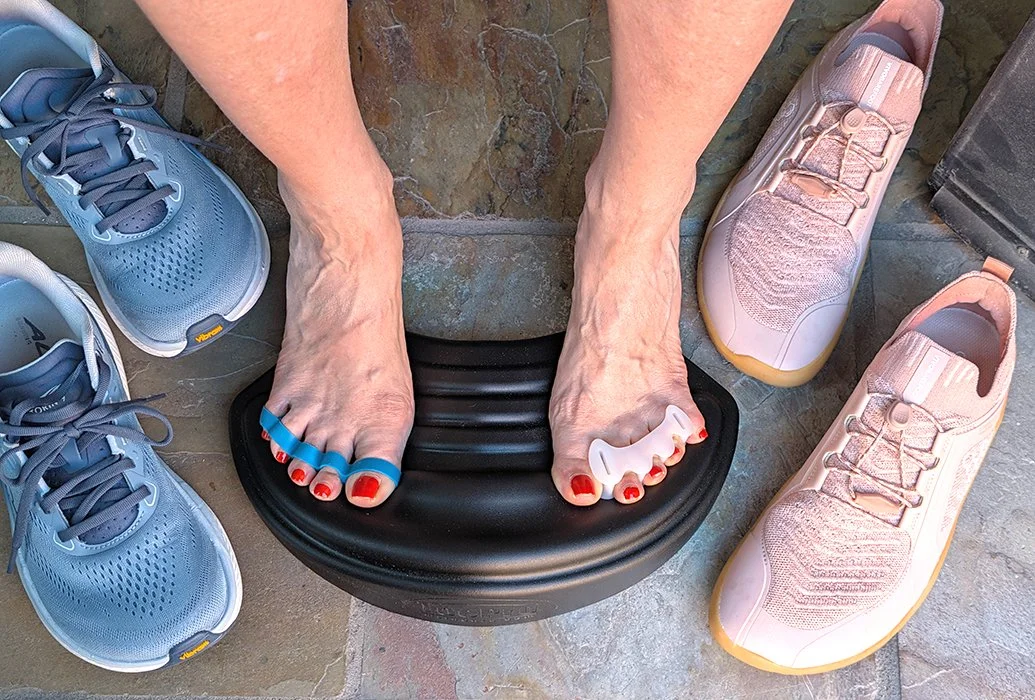
Banner image: my new Strong Feet protocols - Altra Torin 9 shoe, Gait Happens Toe Strengtheners & Toe Spacers, ToePro® Original - Foot/Ankle Exercise Platform, Vivo Barefoot Womens Primus Trail Knit FG

Originally published in my emikooyoga Newsletter, Sept 14, 2026